Government spending

“Life is really simple, but we insist on making it complicated.”

Optimism is rising for two main reasons: The U.S. economy and markets are going to continue to improve because Trump’s pro-growth, America-First administrative agenda – which will include tax cuts, deregulation, decreased trade deficits, and, most importantly, reduced government spending – promises to be extremely effective. Investors know it. Confidence has skyrocketed on the part of corporate executives, small businesses, households, students, and… even farmers.

“Life is really simple, but we insist on making it complicated.” Read More »

“Can you say: Balanced budget?”

Optimism is rising for two main reasons: The U.S. economy and markets are going to continue to improve because Trump’s pro-growth, America-First administrative agenda – which will include tax cuts, deregulation, decreased trade deficits, and, most importantly, reduced government spending – promises to be extremely effective. Investors know it. Confidence has skyrocketed on the part of corporate executives, small businesses, households, students, and… even farmers.

“Can you say: Balanced budget?” Read More »

Perry Capital is very optimistic about the U.S. Economy & Markets. That includes stocks, bonds, and the Dollar. You should be, too.

The promise of a smaller government is what won the election. Reckless government spending, rising deficits, and rising debt levels were inevitably followed by price increases. This is why the new administration’s conservative government agenda was voted into power. It’s always about economics.

Perry Capital is very optimistic about the U.S. Economy & Markets. That includes stocks, bonds, and the Dollar. You should be, too. Read More »

The Democratic Party lost the election because of deteriorating economic conditions.

Voters understood that the previous administration’s policies were slowing growth and inflating the economy. They knew their personal economic prospects were deteriorating and that increased indebtedness, aggressive government spending, and the money printed to pay for it were the cause of their livelihoods’ destruction. They also knew that another four years of the same policies would inevitably result in higher taxation.

The Democratic Party lost the election because of deteriorating economic conditions. Read More »

“Grub first, then ethics.”

The Democratic Party lost the election because of deteriorating economic conditions. The majority of voters are not better off than they were four years ago.
The electorate understood that policies implemented by the previous administration were slowing growth and inflating the economy. Voters knew their personal economic prospects were deteriorating and that increased indebtedness, aggressive government spending, and the money printed to pay for it were the cause of their livelihoods’ destruction. They also knew that another four years of the same policies would inevitably result in higher taxation.

“Grub first, then ethics.” Read More »

“You cannot escape the responsibility of tomorrow by evading it today.”

The economy continues to expand and consistently exceed expectations across most data series. Yet confidence surveys continue to languish well below pre-pandemic levels; at the same time, investor bullishness has rarely been higher. This is unusual and should reconcile itself to some consistency. I would expect confidence to rise. Yet truthfully, it is fiscal dominance –¬ more so than monetary dominance ¬– that is the more significant issue. The debt ceiling is currently suspended. In January 2025, however, it will automatically come back into effect. This means that the U.S. Treasury will not be able to issue more debt until Congress raises or suspends the ceiling again. However, they still have spending obligations and are running structural deficits due to the policies Congress has implemented for decades. Thus, government spending could potentially be forced downward – depending on whether conservatives or liberals control Congress. If that happens, it would be a net positive for the economy.

“You cannot escape the responsibility of tomorrow by evading it today.” Read More »

“In the annual public surveys about trust and reputation, journalists and the media have regularly fallen near the very bottom, often just above Congress.”

The economy continues to expand and consistently exceed expectations across most data series. Yet confidence surveys continue to languish well below pre-pandemic levels; at the same time, investor bullishness has rarely been higher. This is unusual and should reconcile itself to some consistency. I would expect confidence to rise. Yet truthfully, it is fiscal dominance –¬ more so than monetary dominance ¬– that is the more significant issue. The debt ceiling is currently suspended. In January 2025, however, it will automatically come back into effect. This means that the U.S. Treasury will not be able to issue more debt until Congress raises or suspends the ceiling again. However, they still have spending obligations and are running structural deficits due to the policies Congress has implemented for decades. Thus, government spending could potentially be forced downward – depending on whether conservatives or liberals control Congress. If that happens, it would be a net positive for the economy.

“In the annual public surveys about trust and reputation, journalists and the media have regularly fallen near the very bottom, often just above Congress.” Read More »

“The greatest threat facing humanity is a radical Islamist regime meeting up with nuclear weapons.”

The S&P 500 traded to yet another all-time high last week: $5,878. The benchmark closed Friday at $5,865, up 0.9% on the week, while the Dow rose 1%, and the NASDAQ was up 0.8%. The U.S. equity market performance marked the 6th straight week of gains––the longest winning streak of the year.
This should surprise no one. This is an unsurpassed, debt-fueled, inflationary growth cycle.
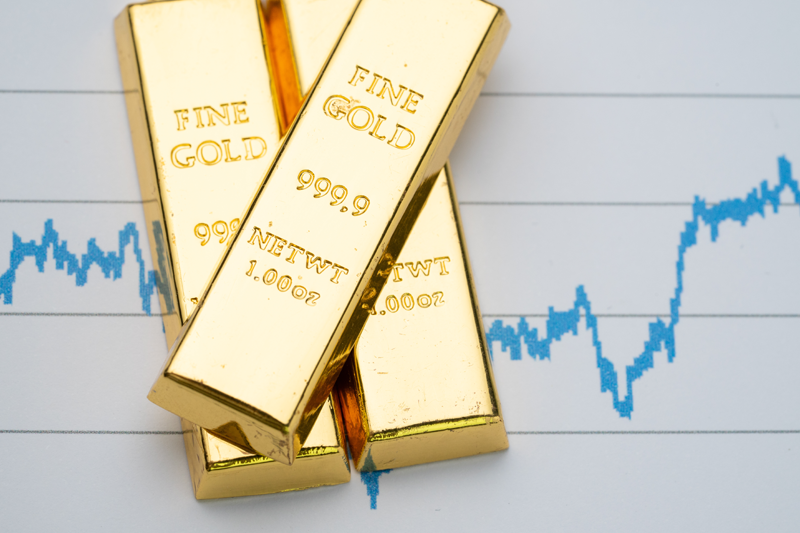
Gold, too, is at another all-time high ($2,749.)
70% of S&P 500 companies reported earnings, and 75% beat expectations, which (truthfully) were marked down over the last month––so, essentially, coming in close to expectations (+6%).
Treasury yields continue to climb and have done so since Powell cut the Fed funds rate on September 18th. This confirms that the financial system, the economy, and markets do not require more stimulus at a time when debt and deficits, along with robust consumer spending and a growing labor force, are providing ample liquidity. 10y Treasuries were bought at 3.595% the day before (3.595%) and have risen to 4.217%. That’s a yield increase of +0.62%.

“The greatest threat facing humanity is a radical Islamist regime meeting up with nuclear weapons.” Read More »

“All great changes are preceded by chaos.”

The Fed seems destined to cut interest rates on September 18th. Chairman Powell and his colleagues have stopped talking about inflation and pivoted towards unemployment. What a shock.

The narrative surrounding the latest Powell pivot is squarely focused on what the Fed believes are the weakening prospects for the U.S. economy, with a clear focus on the full-employment component of their dual mandate. Many agree. Many do not.

Perry Capital anticipates an economy that will continue to expand — supported by healthy consumer spending, bolstered by a labor force that continues to grow and which has never been larger, and by a high level of household income, which has never been greater. This, along with robust government support in select portions of the economy, leads us to believe that growth, employment, and inflation pressure will all continue to surprise to the upside.

“All great changes are preceded by chaos.” Read More »

“Times and conditions change so rapidly that we must keep our aim constantly focused on the future”

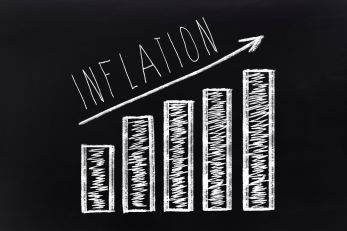
Since January 2021, government measures of core inflation are up 18%-19% if food, energy, and shelter are excluded. However, Food prices are up 25%, Energy prices are up 32%, and Shelter costs are up 22%. Perhaps more critically, Services Inflation, which was up +4.7% in the last twelve months, is up close to 50% over the same time period. Maybe prices for the items that are stripped out of Headline Inflation statistics (i.e., necessities) will fall if we have rising unemployment (and a recession.) But, for now, rising service prices are holding up progress on inflation.

“Times and conditions change so rapidly that we must keep our aim constantly focused on the future” Read More »

“Oh, what a tangled web we weave when first we practice to deceive.”

Market sentiment has taken a significant hit. The astonishing IT failure, regarded by many as the worst ever, has severely dented investor bullishness. It is especially concerning and even more shocking to investors than the political drama we are witnessing. The vulnerability we’re all feeling about our extreme reliance on technology might actually be even worse than originally believed because it’s unclear whether our technology systems can do anything to sufficiently remedy the situation and prevent future occurrences.

“Oh, what a tangled web we weave when first we practice to deceive.” Read More »

“If you do not know what port you sail to, no wind is favorable.”

The S&P 500 touched yet another all-time high Friday at $5,505. It was up +0.6% on the week. The NASDAQ also hit another all-time high ($17,936) but could not break the big round number of $18,000 in two attempts. It was flat on the week. Friday was “Triple Witching” Options expiration – over $5t in options expired. and options were an enormous percentage of expired option contracts and may have contributed to the 10% hit on the shares of .

“If you do not know what port you sail to, no wind is favorable.” Read More »

“By all means, let’s be open-minded, but not so open-minded that our brains drop out.”

The Fed Won’t Cut Rates This Year. Most economists think they should. (Of course, they do! Most of them work for the government or on Wall Street.) But let’s face it, as calculated by the government, inflation for the average household is up 25% since it started rising in 2021. However, for most households, it feels much higher. The point is that inflation is not going to go down. The Fed doesn’t even want it to! Core PCE is rising at 3.5%, and it’s expected to rise to 4% by the election. The Fed’s stated target is +2%; inflation would have to be negative for a prolonged period to bring any relief to the average household.

“By all means, let’s be open-minded, but not so open-minded that our brains drop out.” Read More »

“Prejudice is a great time saver. You can form opinions without having to get the facts.”

All three key US equity indices made all-time new highs for the week on the notion that economic data was softer. We saw:
1. A slowdown in housing activity. (Existing home sales were down -1.9 %, and New Home Sales were down -4.7%, albeit from near-record high levels.)
2. Languishing consumer sentiment surveys (which were at 100 pre-pandemic and bottoming at 50 in 2022) have slipped from 80 in Q1/24 and are down to around 68-69.)
3. Slightly lower inflation expectations (1 year from now nudged lower to 3.3%.)
4. But, most interesting is a notable pick-up in U.S. service activity (the PMI services survey jumped to 54.8 from 51.3), which is where the bulk of the inflationary pressure is causing the greatest damage to households and businesses.

“Prejudice is a great time saver. You can form opinions without having to get the facts.” Read More »

“Any great power that spends more on debt service than on defense will not stay great for long.”

Investors pushed U.S. Equities to all-time highs last week. This is an extraordinary momentum rally that appears to be attracting increasing amounts of investor capital in a sign that the economy can keep its momentum up to, and perhaps beyond, the election. This is a logical assumption based on the realization that the U.S. government is addicted to spending (there is no mention of cutting it by either party.) The rising cost of debt service seems almost an afterthought, and if the debt burden gets high enough to slow the economy, the Fed will increase stimulus. Higher bond yields do not appear to be part of any in-depth analysis. Except mine.

“Any great power that spends more on debt service than on defense will not stay great for long.” Read More »

Men rise to great fortune “more through fraud than through force.”

Valuations are extreme, liquidity is falling, optimism is at record levels, and speculators are longer than they have been all year. The icing on the cake is that the market thinks there will be 6 Fed rate cuts this year. Policymakers at the Fed, most of whom are non-voters, think there will be 3. I think there will be none. The market is ahead of itself.

Men rise to great fortune “more through fraud than through force.” Read More »

“In this new global environment, policymakers, even those previously in the ‘lower forever’ camp…”

Interest rates drive everything, and they are as volatile and directionally uncertain as they’ve ever been. So are the global macroeconomics driving them. Global fund managers are required to make bets on outcomes for stocks, currencies, and commodities based on the cost of money. If perspectives on rates are so dispersed, how can we judge the value of the things that are driven by them?

“In this new global environment, policymakers, even those previously in the ‘lower forever’ camp…” Read More »

“There’s no money. There’s no money.  If we don’t make a fiscal adjustment, we’re headed for hyperinflation…”

Markets need to figure out a normalized level of interest rates appropriate to this volatile new era of De-globalization, rising military engagement, heightened Geopolitical tensions, excessive indebtedness, and the irrational rise in deficit spending.

“There’s no money. There’s no money.  If we don’t make a fiscal adjustment, we’re headed for hyperinflation…” Read More »

The “peak Fed funds narrative” is all the rage… risks have not disappeared, just conveniently ignored.

The “peak Fed funds narrative” is all the rage. The risk rally off the October 27th lows completely overwhelmed the negative market inputs of persistent inflation, excessive indebtedness, deficit spending, weak political leadership, and increased fiscal and monetary stimulus.

The “peak Fed funds narrative” is all the rage… risks have not disappeared, just conveniently ignored. Read More »

“He’s a dictator in the sense that he’s a guy who runs a country that is a communist country…”

The “peak Fed funds narrative” is all the rage. The risk rally off the October 27th lows completely overwhelmed the negative market inputs of persistent inflation, excessive indebtedness, deficit spending, weak political leadership, and increased fiscal and monetary stimulus.

“He’s a dictator in the sense that he’s a guy who runs a country that is a communist country…” Read More »

“Just close the f**king door!” said Fed Chairman Powell after being interrupted…

“Just close the f**king door!” said Fed Chairman Powell after being interrupted by a protestor as he was delivering his latest Policy speech. That line attracted more attention than his comments, which suggested that more hiking may be needed to bring down inflation. Stocks ignored the restrictive bits and determined Powell was cool. The S&P 500 closed at its highest level since September 20th!

“Just close the f**king door!” said Fed Chairman Powell after being interrupted… Read More »

“Just close the F**king Door” — Federal Reserve Chairman Jerome Powell

“Just close the f**king door!” said Fed Chairman Powell after being interrupted by a protestor as he was delivering his latest Policy speech. That line attracted more attention than his comments which suggested that more hiking may be needed to bring down inflation. Stocks ignored the restrictive bits and determined Powell was cool. The S&P 500 closed at its highest level since September 20th!

“Just close the F**king Door” — Federal Reserve Chairman Jerome Powell Read More »

“If not for you, my sky would fall. Rain would gather, too. Without your love…”

75% of the Perry Capital Portfolio remains in AAA-rated, very short maturity, and very liquid securities.
I remain extremely underweight the equity market because the valuation metrics of risk assets are not
discounting for persistent inflation and a slowing economy to the degree necessary to be attractive.

“If not for you, my sky would fall. Rain would gather, too. Without your love…” Read More »