Gold

“In the annual public surveys about trust and reputation, journalists and the media have regularly fallen near the very bottom, often just above Congress.”

The economy continues to expand and consistently exceed expectations across most data series. Yet confidence surveys continue to languish well below pre-pandemic levels; at the same time, investor bullishness has rarely been higher. This is unusual and should reconcile itself to some consistency. I would expect confidence to rise. Yet truthfully, it is fiscal dominance –¬ more so than monetary dominance ¬– that is the more significant issue. The debt ceiling is currently suspended. In January 2025, however, it will automatically come back into effect. This means that the U.S. Treasury will not be able to issue more debt until Congress raises or suspends the ceiling again. However, they still have spending obligations and are running structural deficits due to the policies Congress has implemented for decades. Thus, government spending could potentially be forced downward – depending on whether conservatives or liberals control Congress. If that happens, it would be a net positive for the economy.
“In the annual public surveys about trust and reputation, journalists and the media have regularly fallen near the very bottom, often just above Congress.” Read More »

“The greatest threat facing humanity is a radical Islamist regime meeting up with nuclear weapons.”

The S&P 500 traded to yet another all-time high last week: $5,878. The benchmark closed Friday at $5,865, up 0.9% on the week, while the Dow rose 1%, and the NASDAQ was up 0.8%. The U.S. equity market performance marked the 6th straight week of gains––the longest winning streak of the year.
This should surprise no one. This is an unsurpassed, debt-fueled, inflationary growth cycle.
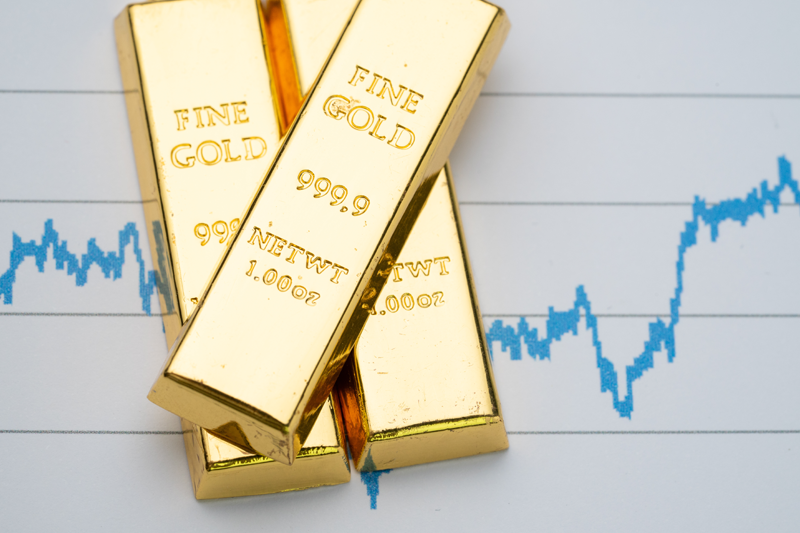
Gold, too, is at another all-time high ($2,749.)
70% of S&P 500 companies reported earnings, and 75% beat expectations, which (truthfully) were marked down over the last month––so, essentially, coming in close to expectations (+6%).
Treasury yields continue to climb and have done so since Powell cut the Fed funds rate on September 18th. This confirms that the financial system, the economy, and markets do not require more stimulus at a time when debt and deficits, along with robust consumer spending and a growing labor force, are providing ample liquidity. 10y Treasuries were bought at 3.595% the day before (3.595%) and have risen to 4.217%. That’s a yield increase of +0.62%.

“The greatest threat facing humanity is a radical Islamist regime meeting up with nuclear weapons.” Read More »

“Neither a state nor a bank ever [has] had the unrestricted power of issuing paper money without abusing that power.”

Stocks rallied smartly last week. The Dow was up 2.6%, The S&P 500 rallied 4.0%, and the Nasdaq jumped 6.0%.
Growth stocks outpaced value shares by a wide margin. The big-cap mega-scalers led the rally, and the poster child for the AI revolution was the clear winner as rallied 16%!
Don’t get too excited, though; the broad market (S&P 500) remains within its range since April. The S&P 500 is marginally
(-0.50%) below, the Nasdaq is -5% below, and the Dow is -17.56% below all-time highs. Markets are skittish and fearful of change.

“Neither a state nor a bank ever [has] had the unrestricted power of issuing paper money without abusing that power.” Read More »

“Sitting [in my office] on a Sunday afternoon… going to the candidates’ debate…”

It has been a bad start to September for the financial markets. The earnings reports portrayed a mixed picture for both the tech sector and the broad economy. Added to that is the upcoming presidential election. Markets do not like uncertainty. There’s plenty of it, and it’s not going away anytime soon.

“Sitting [in my office] on a Sunday afternoon… going to the candidates’ debate…” Read More »

“All great changes are preceded by chaos.”

The Fed seems destined to cut interest rates on September 18th. Chairman Powell and his colleagues have stopped talking about inflation and pivoted towards unemployment. What a shock.

The narrative surrounding the latest Powell pivot is squarely focused on what the Fed believes are the weakening prospects for the U.S. economy, with a clear focus on the full-employment component of their dual mandate. Many agree. Many do not.

Perry Capital anticipates an economy that will continue to expand — supported by healthy consumer spending, bolstered by a labor force that continues to grow and which has never been larger, and by a high level of household income, which has never been greater. This, along with robust government support in select portions of the economy, leads us to believe that growth, employment, and inflation pressure will all continue to surprise to the upside.

“All great changes are preceded by chaos.” Read More »

“Times and conditions change so rapidly that we must keep our aim constantly focused on the future”

Since January 2021, government measures of core inflation are up 18%-19% if food, energy, and shelter are excluded. However, Food prices are up 25%, Energy prices are up 32%, and Shelter costs are up 22%. Perhaps more critically, Services Inflation, which was up +4.7% in the last twelve months, is up close to 50% over the same time period. Maybe prices for the items that are stripped out of Headline Inflation statistics (i.e., necessities) will fall if we have rising unemployment (and a recession.) But, for now, rising service prices are holding up progress on inflation.

“Times and conditions change so rapidly that we must keep our aim constantly focused on the future” Read More »

“If the Lord Almighty came down and said, ‘Joe, get out of the race,’ I’d get out. But He’s not coming down.”

Being an economic thinker rather than a political one, I will say that all these elections seem to have one thing in common—voters are rejecting the status quo of imposed statism. They are rejecting the policies of excessive indebtedness and deficit sending. Voters know first-hand that slow growth and higher prices are pushing them further and further behind in their quality of life. The famous “misery index” is rising everywhere from Beijing to Tehran, Moscow to Paris, Berlin to London, and Washington. Most major countries across the world are in danger of debt death spirals. Voters everywhere know government bureaucrats are asking them to sacrifice more than they can bear. They want change.

“If the Lord Almighty came down and said, ‘Joe, get out of the race,’ I’d get out. But He’s not coming down.” Read More »

“I thought by now you’d realize, there ain’t no way to hide your lyin’ eyes.”

Stagflation reigns. Slow growth (2.5%) with rising inflation (4%) — driven by the rising cost of labor (+5%) — is the very definition of a stagflating economy. This forecast remains the dominant theme for the economy, markets, and investors. Stagflation has been the Perry International Capital Partners (PICP) forecast for two years, and we continue to be more worried about rising inflation than we are about slower growth.

“I thought by now you’d realize, there ain’t no way to hide your lyin’ eyes.” Read More »

“In this new global environment, policymakers, even those previously in the ‘lower forever’ camp…”

Interest rates drive everything, and they are as volatile and directionally uncertain as they’ve ever been. So are the global macroeconomics driving them. Global fund managers are required to make bets on outcomes for stocks, currencies, and commodities based on the cost of money. If perspectives on rates are so dispersed, how can we judge the value of the things that are driven by them?

“In this new global environment, policymakers, even those previously in the ‘lower forever’ camp…” Read More »