Fed

“He who awaits much can expect little.”

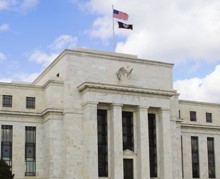
The Big Story of the Week was Powell’s speech in Jackson Hole. The Chairman’s message was clear: The Fed’s focus has shifted exclusively in the direction of U.S. Employment. Inflation will be allowed to run hot–especially in services and shelter.
There was little doubt that more stimulus was coming. Powell has signaled for months that he wants to stimulate—all he needed was supporting evidence. He got it. The BLS revised its new job calculations (Reducing the new jobs created in the year by over 800,000), which now indicate that employment growth was 30% lower than previously advertised.

“He who awaits much can expect little.” Read More »

“The source of the rise in the U.S. unemployment rate is not job cuts but a rise in labor supply”

The partial unwind of the Yen carry trade unleashed so much volatility that the Bank of Japan promised no further rate hikes during times of market turbulence. The Dollar has collapsed against the Yen. The BOJ’s intention was to support the Yen, but the Dollar collapse is really about U.S. debt and deficits.

“The source of the rise in the U.S. unemployment rate is not job cuts but a rise in labor supply” Read More »

“The ancient art of deception is to present two lies and get the people arguing viciously about which is true.”

When the Fed finally started raising interest rates in March 2022, Mr. Powell reminded investors that the Fed’s primary objectives were full employment and stable prices. The Fed is now as close as it has been to achieving those objectives since the pandemic.
A balanced and patient Fed has been a stabilizing force in a chaotic world. Global GDP is rising, and headline inflation pressures in most countries appear to be abating. Perhaps the Fed’s duel mandate is on the verge of being realized.
Mr. Powell’s Fed last hiked rates in July 2023, yet the economy appears to be slowing more quickly now than it has since the Fed paused. Indeed, reporting to Congress last week, Mr. Powell sounded even more dovish than he did at the G7 confab 10 days ago. He seems convinced the Fed is succeeding in reducing inflation and is on track to reach its target objective of 2%. Maybe he’s right.

“The ancient art of deception is to present two lies and get the people arguing viciously about which is true.” Read More »

“If the Lord Almighty came down and said, ‘Joe, get out of the race,’ I’d get out. But He’s not coming down.”

Being an economic thinker rather than a political one, I will say that all these elections seem to have one thing in common—voters are rejecting the status quo of imposed statism. They are rejecting the policies of excessive indebtedness and deficit sending. Voters know first-hand that slow growth and higher prices are pushing them further and further behind in their quality of life. The famous “misery index” is rising everywhere from Beijing to Tehran, Moscow to Paris, Berlin to London, and Washington. Most major countries across the world are in danger of debt death spirals. Voters everywhere know government bureaucrats are asking them to sacrifice more than they can bear. They want change.

“If the Lord Almighty came down and said, ‘Joe, get out of the race,’ I’d get out. But He’s not coming down.” Read More »

“There is an inevitable divergence, attributed to the imperfections of the human mind, between the world as it is and the world as men perceive it.”

Stimulus remains ample, and Mr. Powell was more dovish than even the most strident risk asset bulls anticipated. Government activism in the economy and capital market and economy remain and are accelerating.
The performance of the U.S. equity and credit markets is excellent, and they are aggressively testing the Fed, which doesn’t see the threat unless, of course, they see something that we don’t. Three cuts are still expected in 2024. Stocks should remain encouraged but for how long?

“There is an inevitable divergence, attributed to the imperfections of the human mind, between the world as it is and the world as men perceive it.” Read More »

“In economics, things take longer to happen than you think, then happen faster than you thought they could.”

The stock market had its best week since November 2022 (S&P 500 was up almost 6% and the NASDAQ, almost 7%.) The intense rally occurred for four reasons, in critical orders of importance and timing: 1) Hedge funds covered huge short positions in bonds and stocks, 2) Less long maturity Treasury bond supply, 3) Investors interpreted Mr. Powell’s message as a signal for peak rates, and 4) Slower growth in the labor market.

“In economics, things take longer to happen than you think, then happen faster than you thought they could.” Read More »

“The scientific man does not aim at an immediate result. He does not expect that his advanced ideas will be readily…”

Interest rates have been rising not just because of inflation but because of accelerating credit risk. The U.S. Government has gotten itself into a position where it is forced to borrow in a higher rate environment. This is tremendously problematic because, at some point, rates will rise far enough that investors will be forced to reduce their U.S. equity holdings. The potential destruction of investor wealth may be significant enough to force the Fed to abandon its inflation fight. The Fed will stop its tightening campaign when the stock market tells it to. That moment may even arrive more quickly than we can imagine, but believe me, it’s out there.

“The scientific man does not aim at an immediate result. He does not expect that his advanced ideas will be readily…” Read More »

“If some ‘expert’ were to come up with even the most meager ‘proof’ that…”

Global macro geo-political and economic factors will remain the most significant factors for investors in the days, weeks, and months ahead. A broader and far more destructive armed conflict and escalated military engagement are, by far, the most significant issues confronting investor portfolios.

Wars are inflationary. Now we have two of them. Deglobalization, which is accelerating, will also result in higher prices. Bond investors are increasingly and rightfully vigilant. They demand a higher risk premium for the deteriorating financial state of the U.S. Government.

“If some ‘expert’ were to come up with even the most meager ‘proof’ that…” Read More »

“Some people don’t like change, but you need to embrace change if the alternative is disaster.”

• Investors’ “Flight to Safety” trades dominated market action last week. That trend will continue. The most obvious shift in investor sentiment was the screeching halt to the trend of higher rates in the U.S. Treasury market. 10y Treasury yields reversed their ascent. Rates fell from almost 5% to this morning’s current level of 4.60%. Gold rose 3.5%, and Oil (SPOT WTI) (+3.4%) surged.

“Some people don’t like change, but you need to embrace change if the alternative is disaster.” Read More »

“Our settled aspiration is avoiding the market crevasses. My experience suggests there is almost an inevitability…”

Bond yields are rising because Supply is rising… and Demand is falling. Bond investors demand more of a premium due to a much higher risk in owning U.S. Government debt. Indebtedness, the leverage on it, and deficit spending are overwhelming the capacity of bond portfolio managers to take on additional risk…

“Our settled aspiration is avoiding the market crevasses. My experience suggests there is almost an inevitability…” Read More »