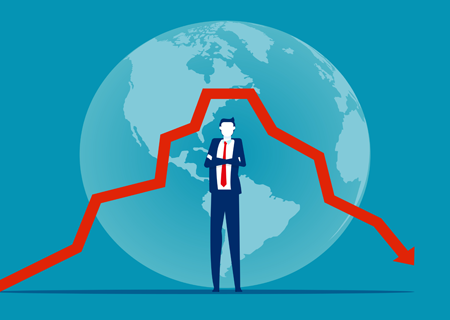
Stimulus expectations have been slashed as inflation expectations have surged.
Stimulus expectations have been slashed as inflation expectations have surged. Read More »



I have said for almost a year that there will be no Fed cuts in 2024. I stand by that forecast for one simple reason: “Immaculate Disinflation” is over. The U.S. economy is inflating, and it has been for a year. The structural and systemic price increases are not only permanent but accelerating. The twin cancers of elevated and rising inflation have metastasized and imperiled the health of the U.S. economy.
“You don’t need a weatherman to know which way the wind blows.” Read More »
Stagflation reigns. Slow growth (2.5%) with rising inflation (4%) — driven by the rising cost of labor (+5%) — is the very definition of a stagflating economy. This forecast remains the dominant theme for the economy, markets, and investors. Stagflation has been the Perry International Capital Partners (PICP) forecast for two years, and we continue to be more worried about rising inflation than we are about slower growth.
“I thought by now you’d realize, there ain’t no way to hide your lyin’ eyes.” Read More »
Last week was another riveting week in U.S. financial markets. The Nasdaq reached new all-time highs, marking the fourth consecutive month of gains for the S&P 500, which has increased in 16 of the past 18 weeks – a 25% rise in four months. During the same period, the Magnificent Seven (Mag7) stocks surged by 40%, Nvidia by 110%, and Bitcoin by 150%, with a notable 21% increase in just the last week. Bitcoin emerged as the standout performer.

The extreme performance divergence between sectors on the receiving side of the stimulus is stunning. The businesses best positioned to benefit from spending by the upper and upper-middle class are thriving — just look at the share prices of your favorite credit card company; they are at all-time highs. Those most sensitive to interest rates and, thereby, the worst positioned for tight monetary policy are or soon will be flirting with bankruptcy. If you look at commercial real estate owners and their lending banks, you’ll see that their share prices are at all-time lows.
The extreme performance divergence between sectors on the receiving side of the stimulus is stunning. The businesses best positioned to benefit from spending by the upper and upper-middle class are thriving — just look at the share prices of your favorite credit card company; they are at all-time highs. Those most sensitive to interest rates and, thereby, the worst positioned for tight monetary policy are or soon will be flirting with bankruptcy. If you look at commercial real estate owners and their lending banks, you’ll see that their share prices are at all-time lows.
Economic data continues to surprise to the upside; the Citi surprise index was up again from last week (44.10 vs 39.0) and the January lows (0). It is above pre-pandemic levels, and the labor market is stronger, too. Unemployment is 3.7%, with claims falling and the number of available jobs rising.
Fed Watch is on. No rate cut this week — for sure — and traders are not betting on one in March either, but Powell will probably keep the door open so that stocks and bonds do not face a drawdown.
• That means the first possibility of a cut will not present itself until May 1st.
• The Employment report comes out Friday, and earnings reports from some of the most important companies will filter in all week.
• Considering where we are with respect to valuations, the slightest negative surprise in any of the data could have outsized effects on markets.
The U.S. Stock market reached an all-time high!
On the week: The Dow rose 1.5%. It is up 2.56% in 2024 to 38,654. The S&P 500 closed- up 1.4%. It is up 3.96% for 2024 to 4,958.The Nasdaq gained 1.7%. to 15,628. It is up 2.56% for 2024 to 15,628.
Last week marked the 4th week in a row of gains for the major benchmarks. Stocks have rallied 13 out of 14 weeks. The only down week was the first week of January. This is a serious Bull-snorting rally.
The catalyst for the gains were Big Cap Tech earnings, stronger employment growth, and rising optimism for growth even with a steady Fed, which left rates unchanged (5.50%) at its first meeting of the year. Traders have already taken the March Rate cut off the table.
“The health of nations is more important than the wealth of nations.” Read More »
Fed Watch is on. No rate cut this week — for sure — and traders are not betting on one in March either, but Powell will probably keep the door open so that stocks and bonds do not face a drawdown.
• That means the first possibility of a cut will not present itself until May 1st.
• The Employment report comes out Friday, and earnings reports from some of the most important companies will filter in all week.
• Considering where we are with respect to valuations, the slightest negative surprise in any of the data could have outsized effects on markets.

The Fed will remain very cautious about changing policy any time soon. The economy grew at 3.1% in 2023; it inflated at 4.1%, and wages grew at 5.2%. These are very strong numbers. Economic and market performance does not cry out for stimulus.
The Fed has never cut rates with stocks at record highs when the economy is expanding, and with inflation remaining above target levels. Stimulus seems unnecessary with corporate profit margins at record levels, financial markets extremely liquid, the economy operating at full employment, with personal incomes and wages rising faster than inflation and more quickly than growth.

The Western world is in danger, and it is in danger because those who are supposed to defend the values of the West are co-opted by a vision of the world that inexorably leads to socialism and, thereby, to poverty.
Unfortunately, in recent decades, motivated by some well-meaning individuals willing to help others, and others motivated by the wish to belong to a privileged caste, the main leaders of the Western world have abandoned the model of freedom for different versions of what we call collectivism. We are here to tell you that collectivist experiments are never the solution to the problems that afflict the citizens of the world. Rather, they are the root cause.
I think the most significant storyline of the week was the pushback by key Fed officials just prior to the Fed media blackout period. The message was that the market was ahead of itself in pricing six rate cuts over the course of the year. The Fed Funds Futures have taken the March Cut off the table. Stocks rallied by the end of the week anyway.
The Western world is in danger, and it is in danger because those who are supposed to defend the values of the West are co-opted by a vision of the world that inexorably leads to socialism and, thereby, to poverty.
Unfortunately, in recent decades, motivated by some well-meaning individuals willing to help others, and others motivated by the wish to belong to a privileged caste, the main leaders of the Western world have abandoned the model of freedom for different versions of what we call collectivism. We are here to tell you that collectivist experiments are never the solution to the problems that afflict the citizens of the world. Rather, they are the root cause.
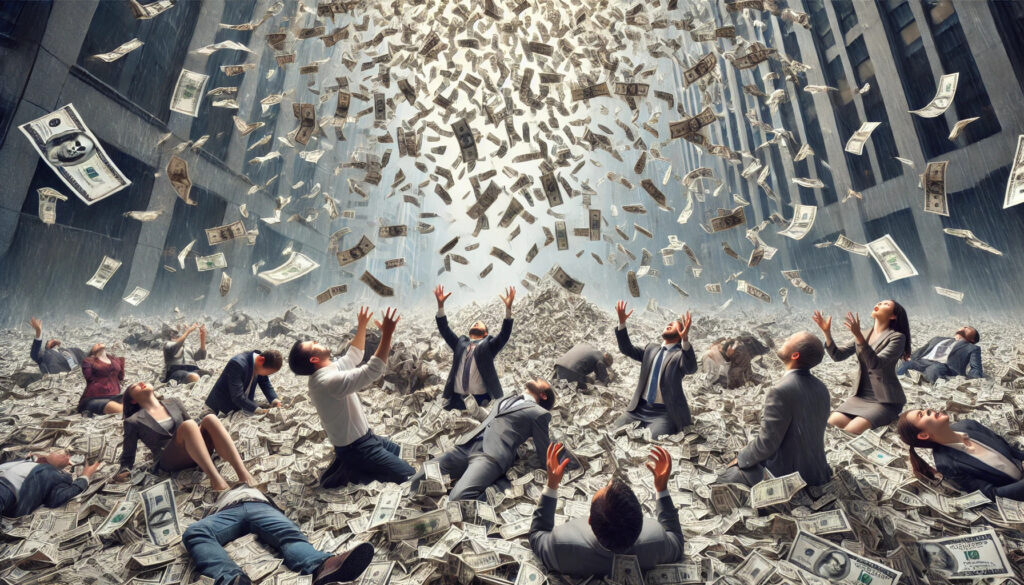
10y Treasuries closed at 3.94%, and 3-month bill rates remain at elevated levels (5.35%). The Treasury yield curve remains deeply inverted (1.41bps) because Treasury Bill supply remains simply enormous — over half a trillion will be auctioned again this month. Excessive indebtedness and steady deficit spending continue to be a burden even though most in the market these days simply ignore it. This is just shocking to me.
This past week we saw Q4 earnings reports. Jamie Dimon, the leader of the best-run bank in the world (an obvious bellwether for the economy), professes to be extremely worried about growth, employment, commercial real estate, the lagged effects of Fed tightening policy, deficits, geopolitical risk, and weak political leadership. He thinks the Fed should initiate more Quantitative Easing. I do not.

The icing on the cake is that the market thinks there will be 6 Fed rate cuts this year. Policymakers at the Fed, most of whom are non-voters, think there will be 3. I think there will be none. The market is ahead of itself.
Valuations are extreme, liquidity is falling, optimism is at record levels, and speculators are longer than they have been all year. The icing on the cake is that the market thinks there will be 6 Fed rate cuts this year. Policymakers at the Fed, most of whom are non-voters, think there will be 3. I think there will be none. The market is ahead of itself.
Men rise to great fortune “more through fraud than through force.” Read More »
The story of the year for investors was the unprecedented surge in liquidity, which drove high-beta risk assets back up to the 2022 highs.
Lower Inflation and its influence on interest rates and the stock market was enormously impactful.
Here is what happened last year… Here is what will happen this year. Read More »

Wednesday, Fed Chairman Jerome Powell, citing continued progress on lowering inflation towards target and a more balanced labor market, said the Fed was likely done raising rates. Furthermore, he indicated policymakers are beginning to talk about cutting rates.
The Powell Pivot! What a difference two weeks can make. Read More »
Interest rates drive everything, and they are as volatile and directionally uncertain as they’ve ever been. So are the global macroeconomics driving them. Global fund managers are required to make bets on outcomes for stocks, currencies, and commodities based on the cost of money. If perspectives on rates are so dispersed, how can we judge the value of the things that are driven by them?
Key economic reports in the upcoming week are various and reasonably important, but Friday’s employment report is the only one that really matters. The Fed’s game plan was to raise interest rates enough to reduce the imbalance in the labor market. But the tightening is really quite marginal compared to the continued stimulus, and it is that stimulus that has been supportive of higher equity valuations and growth. I think the stock market sees this. What it fails to see — for now — is that the stimulus is supporting higher prices.

Markets need to figure out a normalized level of interest rates appropriate to this volatile new era of De-globalization, rising military engagement, heightened Geopolitical tensions, excessive indebtedness, and the irrational rise in deficit spending.
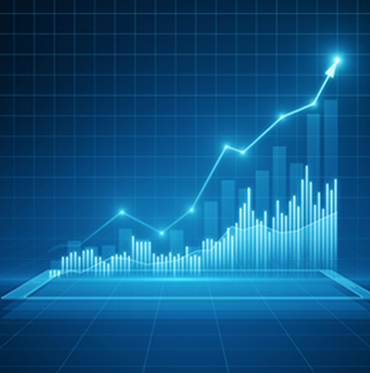
Markets need to figure out a normalized level of interest rates appropriate to this volatile new era of De-globalization, rising military engagement, heightened Geopolitical tensions, excessive indebtedness, and the irrational rise in deficit spending.

The “peak Fed funds narrative” is all the rage. The risk rally off the October 27th lows completely overwhelmed the negative market inputs of persistent inflation, excessive indebtedness, deficit spending, weak political leadership, and increased fiscal and monetary stimulus.
The “peak Fed funds narrative” is all the rage. The risk rally off the October 27th lows completely overwhelmed the negative market inputs of persistent inflation, excessive indebtedness, deficit spending, weak political leadership, and increased fiscal and monetary stimulus.

“Just close the f**king door!” said Fed Chairman Powell after being interrupted by a protestor as he was delivering his latest Policy speech. That line attracted more attention than his comments, which suggested that more hiking may be needed to bring down inflation. Stocks ignored the restrictive bits and determined Powell was cool. The S&P 500 closed at its highest level since September 20th!
“Just close the f**king door!” said Fed Chairman Powell after being interrupted… Read More »
“Just close the f**king door!” said Fed Chairman Powell after being interrupted by a protestor as he was delivering his latest Policy speech. That line attracted more attention than his comments which suggested that more hiking may be needed to bring down inflation. Stocks ignored the restrictive bits and determined Powell was cool. The S&P 500 closed at its highest level since September 20th!
“Just close the F**king Door” — Federal Reserve Chairman Jerome Powell Read More »
The U.S. and China are meeting in San Francisco. Shifting macroeconomic fortunes and geopolitical challenges concerning security, technology, trade, and military conflict in Ukraine, Gaza, and Taiwan, will feature prominently, as will the military alliances the Chinese are nurturing with Russia, Iran, and North Korea.

The subject of this week’s deep dive is the shambolic state of U.S. government finances and the danger of a higher structural shift in interest rates.
Deep Dive: The danger of a higher structural shift in interest rates. Read More »
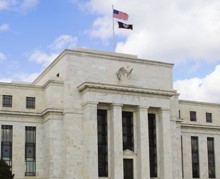
Global macro geo-political and economic factors will remain the most significant factors for investors in the days, weeks, and months ahead.
Chairman Powell insists the Fed isn’t thinking about rate cuts… Read More »
The stock market had its best week since November 2022 (S&P 500 was up almost 6% and the NASDAQ, almost 7%.) The intense rally occurred for four reasons, in critical orders of importance and timing: 1) Hedge funds covered huge short positions in bonds and stocks, 2) Less long maturity Treasury bond supply, 3) Investors interpreted Mr. Powell’s message as a signal for peak rates, and 4) Slower growth in the labor market.

Global macro geo-political and economic factors will remain the most significant factors for investors in the days, weeks, and months ahead.
As the Middle East conflagration intensifies, investors are losing confidence… Read More »
Interest rates have been rising not just because of inflation but because of accelerating credit risk. The U.S. Government has gotten itself into a position where it is forced to borrow in a higher rate environment. This is tremendously problematic because, at some point, rates will rise far enough that investors will be forced to reduce their U.S. equity holdings. The potential destruction of investor wealth may be significant enough to force the Fed to abandon its inflation fight. The Fed will stop its tightening campaign when the stock market tells it to. That moment may even arrive more quickly than we can imagine, but believe me, it’s out there.
Global macro geo-political and economic factors will remain the most significant factors for investors in the days, weeks, and months ahead.
Global macro geo-political and economic factors will remain the most significant factors for investors in the days, weeks, and months ahead. A broader and far more destructive armed conflict and escalated military engagement are, by far, the most significant issues confronting investor portfolios.
Wars are inflationary. Now we have two of them. Deglobalization, which is accelerating, will also result in higher prices. Bond investors are increasingly and rightfully vigilant. They demand a higher risk premium for the deteriorating financial state of the U.S. Government.
“If some ‘expert’ were to come up with even the most meager ‘proof’ that…” Read More »
War returns to the Middle East as Israel prepares for a ground invasion of Gaza. Investors’ “Flight to Safety” trades dominated market action last week. That trend will continue.
War returns to the Middle East as Israel prepares for a ground invasion of Gaza. Read More »
• Investors’ “Flight to Safety” trades dominated market action last week. That trend will continue. The most obvious shift in investor sentiment was the screeching halt to the trend of higher rates in the U.S. Treasury market. 10y Treasury yields reversed their ascent. Rates fell from almost 5% to this morning’s current level of 4.60%. Gold

In 2001, Jim O’Neil of Goldman Sachs coined the acronym BRIC to define an asset class for promoAng
investment through Goldman, of course, into Brazil, Russia, India, and China.
Inflation is rising because government spending is rising, exacerbating an already severely imbalanced labor market. The demand for labor enforces salary bargaining power, so wages are rising; this is the source of structural inflation, which is becoming systemically embedded into the economy.
Bond yields are rising because Supply is rising… and Demand is falling. Read More »
Bond yields are rising because Supply is rising… and Demand is falling. Bond investors demand more of a premium due to a much higher risk in owning U.S. Government debt. Indebtedness, the leverage on it, and deficit spending are overwhelming the capacity of bond portfolio managers to take on additional risk…
The greater issue is government spending, which is exerting upward pressure on wages and raising the cost of capital.

Inflation is rising because government spending is rising, exacerbating an already severely imbalanced labor market. The demand for labor enforces salary bargaining power, so wages are rising; this is the source of structural inflation, which is becoming systemically embedded into the economy.
Inflation is rising because government spending is rising… Read More »
80% of the Perry Capital Portfolio holds liquid and guaranteed-return investments with interest rates constantly
adjusting to the higher rate structure that is coming.
“You can’t always get what you want, but if you try, sometimes…” Read More »

“It’s the strike, it’s government shutdown, resumption of student loan payments, higher long-term rates, oil
price shock,” said Fed Chairman Jerome Powell last Wednesday, responding to a question about external
factors that supported the Fed’s decision not to hike rates.
The Fed has paused its interest rate hiking campaign… Read More »
In 2001, Jim O’Neil of Goldman Sachs coined the acronym BRIC to define an asset class for promoAng
investment through Goldman, of course, into Brazil, Russia, India, and China.
The allocation within my 10% position in the S&P 500 is changing. When finished, I will be overweight Energy,
Defense, and Technology and underweight the REIT, Telecommunication, Healthcare, and Financial sectors.

In 2001, Jim O’Neil of Goldman Sachs coined the acronym BRIC to define an asset class for promoAng
investment through Goldman, of course, into Brazil, Russia, India, and China.
80% of the Perry Capital Portfolio holds liquid and guaranteed-return investments with interest rates constantly
adjusting to the higher rate structure that is coming.
“I think it’s absolutely clear that the fiscal path we are on is not sustainable…” Read More »
RIP to a fellow ‘Floridian,’ musician, and capitalisCc genius who, like his “Uncle Warren,” showed in words and
deeds that it’s not about the money.
“Independence Day – and all I remember was a midnight rainbow that fell…” Read More »

In 2001, Jim O’Neil of Goldman Sachs coined the acronym BRIC to define an asset class for promoAng
investment through Goldman, of course, into Brazil, Russia, India, and China.
80% of the Perry Capital Portfolio holds liquid and guaranteed-return investments, the interest rates on which
are constantly adjusting to the higher rate structure that is coming.
“We are navigating by the stars under cloudy skies…” Read More »

True to the title of his speech: “Inflation: Progress and the Path Ahead,” Powell spent most of this year’s
Jackson Hole speech talking about inflation. As mentioned earlier in this report, he set the tone by saying, “It
is the Fed’s job to bring inflation down to our 2 percent goal, and we will do so.”
Deep Dive: The Fed, Inflation, Progress, and the Path Ahead Read More »
The Perry Capital Portfolio holds 62.5% in the Money Market, earning a risk-free rate of: 5.24%. It holds an
additional 15% in T-Bills, which have an average guaranteed return of 5.25%. It holds a 10% position in long Treasuries.
“We have normality. I repeat, we have normality. Anything you still can’t cope…” Read More »
There is no doubt that the majority of investors have been surprised by the 2023 equity market rally. The
soaring stock market was led by the few big-cap tech stocks, which were ridiculously expensive to begin with.
Deep Dive: Explaining Low Market Volatility in a High-volatility World Read More »
The Perry Capital Portfolio holds 62.5% in the Money Market, earning a risk-free rate of: 5.24%. It holds an
additional 15% in T-Bills, which have an average guaranteed return of 5.25%. It holds a 10% position in long Treasuries.
No real in-depth deep dive this week; here’s just a quick liEle bit of interes’ng math and an observa-on
about risk.
Deep Dive: Interesting Math, Risk Observations, Interest… Read More »
Let’s cut to the chase. It says the Fed has raised the Fed funds rate to 5.5%, and 10y Treasury yields are
unchanged.
The Perry Capital Portfolio holds 62.5% in the Money Market, earning a risk-free rate of: 5.24%. It holds an
additional 15% in T-Bills, which have an average guaranteed return of 5.25%. It holds a 10% position in long Treasuries.
“Higher interest rates have not affected the U.S. Economy.” Read More »
Let’s cut to the chase. It says the Fed has raised the Fed funds rate to 5.5%, and 10y Treasury yields are
unchanged.

The Perry Capital Portfolio is conservative. It always has been and certainly is now. Perhaps too much so. It
holds 62.5% in the Money Market, earning a risk-free 5.18%, with an additional 15% in T-Bills which have an average guaranteed return of 5.25%.
“People are listening to narrative and not paying attention to data.” Read More »

The rise of China has been one of the most transforma0ve developments in modern 0mes. I have a
friend from Shanghai who studied in Singapore and London and is now an investment professional at an
extremely influen:al investment firm in The City. I am honored to call her a client.

Three years ago, as the pandemic shut down the world, many looked to history
for clues about how the “unprecedented” crisis would unfold. However, it actually turns out to be
“precedented!”
77.25% of the Perry Capital portfolio yields 5.10% with principal guaranteed. As you know by now, I sold my
short 25% Treasury positions
“When the government assumes all the risk, it’s the currency that is at risk.” Read More »
77.25% of the Perry Capital portfolio yields 5.11% with principal guaranteed. I sold my short 25% Treasury
positions
“Honesty is a very expensive gift. Don’t expect it from cheap people.” Read More »
Markets are closed for the next couple of days, and I depart for Europe on the 5th. My presentation package for
European investors will be done before I leave. This is a quick 14-Point message and the charts package, which
will be part of the Weekly in 2 days. to enjoy through the long weekend.
Happy Canada Day to the Canadians… and happy July 4th to the Americans! Read More »

77.25% of the Perry Capital portfolio yields 5.09% with principal guaranteed. I sold my short 25% Treasury
positions
exposure.
60% of the Perry Capital portfolio yields 5.09% with principal guaranteed. I sold my short 25% Treasury
positions
lower.
Everything I own is up in 2023. But I’m not that good. Most asset classes are up. This tells me there is too much
money around. The Fed should know this and hike.
“The space between the tears we cry is the laughter – keeps us coming back for more.” Read More »
75% of the Perry Capital Portfolio remains AAA-rated, very short maturity, and very liquid securities.
I remain underweight in the equity market because the valuation metrics of risk assets are not discounting for
persistent inflation, higher funding rates, and a slowing economy to the degree necessary to be attractive.
“Never in the field of human conflict was so much owed by so many…” Read More »
75% of the Perry Capital Portfolio remains AAA-rated, very short maturity, and very liquid securities.
I remain underweight in the equity market because the valuation metrics of risk assets are not discounting for
persistent inflation and a slowing economy to the degree necessary to be attractive. I would rather watch from
the sidelines at 5% until the strategic risk/reward is in my favor.
“We tend to overestimate the effect of a technology in the short run and underestimate…” Read More »
75% of the Perry Capital Portfolio remains in AAA-rated, very short maturity, and very liquid securities.
I remain underweight the equity market because the valuation metrics of risk assets are not discounting for
persistent inflation and a slowing economy to the degree necessary to be attractive. I would rather watch from
the sidelines at 5% until the strategic risk/reward is in my favor. I must say, though, that the Nasdaq 100 (QQQ)
performance y-t-d is impressive. Perhaps A.I. is a paradigm shift as impactful as the internet.
“The problem with leverage is that you have to pay it back.” Read More »
75% of the Perry Capital Portfolio remains in AAA-rated, very short maturity, and very liquid securities.
I remain underweight the equity market because the valuation metrics of risk assets are not discounting for
persistent inflation and a slowing economy to the degree necessary to be attractive. I would rather watch from the sidelines at 5% until the strategic risk/reward is in my favor.
“Politicians are like bad horsemen who are so preoccupied with staying in the saddle…” Read More »
75% of the Perry Capital Portfolio remains in AAA-rated, very short maturity, and very liquid securities.
I remain extremely underweight the equity market because the valuation metrics of risk assets are not
discounting for persistent inflation and a slowing economy to the degree necessary to be attractive.
“If not for you, my sky would fall. Rain would gather, too. Without your love…” Read More »